All you need to know:
The disproportionate amount of attention given to law enforcement officers, which is almost always negative, by the news media gives people the feeling that more is “at play” than there is. The media is not hesitant to bait others into saying or doing what they themselves wish, usually to the detriment of the baitee. If the persons can’t be baited, then the media will twist their words.
The media wants to portray the police in a way that falsely gives the impression that police selectively enforce the laws and give more attention to a crime if the victim is white and less attention if a prostitute or homeless person is involved. Especially if the suspect is not white. This is ridiculous. Officers are predominantly law-abiding, civic-minded soccer moms or dads. Their goal is to be happy with their family and friends. It is not going to work to be evil and cruel; someone completely the opposite of when at home. It’s the news media, the reporters, the writers, and especially the producers who have much more in common with crooks than law enforcement.
Details:
The current prejudice against police officers is glaring. Just look around at current events. If someone makes an allegation against an officer, it is assumed true by the weight of this prejudice. All one has to do is make an allegation against the police, and the media instantly picks it up and reports it as true. And if it can’t be proven true, then it must be because the officers are hiding behind a “blue wall of silence.”
There is no vast understanding among all officers to lie to defend other officers’ actions. In today’s world, police officers are the first to turn in dishonesty by fellow officers. Police officers are usually building careers that include promotions. If a carpenter is arrested for shoplifting, it isn’t news; if a police officer is arrested, it is news. Police bad conduct is disproportionately reported.
If a police officer is making an arrest for some crime, it goes to reason that that person would be willing to lie if it could help themselves.
Years ago, individual police officers began audio recording their activities. This was after the advent of small recording devices. The reason was that if someone made a complaint against the officer, there was an audio account. Once played in front of the accuser, the complaint was usually dropped. Of course, police misconduct happens, and it is being addressed aggressively, as it should be. Officers should be held to a higher standard, just not the standard of perfection. There will always be those who become officers for the sole reason to commit crimes.
The public’s attention is naturally drawn to officers and their actions. When the Rodney Glen King (police misconduct was recorded by a private person, see that incident) incident occurred, I heard more than one TV news report suggest that “If this was recorded by chance, how often do they really occur?” Nearly everyone has a camera now, and nearly everything an officer does is recorded. Where is the avalanche of misconduct by police officers?
Keep in mind that when someone makes a complaint against an officer, it is often because the officer has been called there to keep the peace, settle a dispute, arrest someone, and/or protect the prey against the predator. There is almost always someone infuriated by officers, and thus a possible complaint. Many times, the person being preyed upon is black, as is the suspect. There is much more black-on-black and black-on-white crime than white-on-black.
Today, most agencies have a very good ratio of black officers to white ones. I’ve heard many complaints that an agency has placed too many black officers in their predominantly white sections and too few in the predominantly black ones. FACT: many black officers don’t want to work in black neighborhoods. Why? Because they are treated very harshly in black sections.
Trivia time, just for fun:
An off-duty LAPD officer went to a little bar in a medium-sized beach town on the coast of Southern California. While there, it became known to some drunk college types that he was an off-duty police officer. He wisely left the bar. He was followed by five men who confronted him and threatened to beat him. (P.S. all involved were white) Knowing he was about to be beaten, he drew his weapon and warned the men. Being drunk, they ignored it. He fired a round into the parking lot pavement. Being drunk, the men continued toward him until he shot one of them. Dead, as it turned out.
Local police from Huntington Beach investigated the incident. The man who was shot died. The other men claimed that the officer shot without a warning and without provocation. The investigators failed to find the spent slug from the officer’s warning shot. The officer was arrested. LAPD Internal Affairs began an investigation. In cases like this, the norm is for the police department to wait until the criminal complaint is adjudicated before starting its Trial Board. The criminal trial took nearly a year to begin. Meanwhile, the officer was held in jail because he couldn’t post bail. No one came to his aid. The Los Angeles Police Protective League will often help, but not this time.
By law, LAPD has only one year to adjudicate their civil case, and since that date was approaching, they convened a Trial Board before the criminal trial. Their procedure allows an officer to have another officer represent him as an advocate during the board. An officer’s “attorney,” if you will. That officer visited the scene in the beach town to search for the slug that should be in the parking lot’s pavement. The LAPD Trial Board Advocate searched and searched for it. Eventually, he found it. He called the local police to pry it out of the pavement so it could be compared to the officer’s gun, which was being held as evidence by them.
Ballistics proved that it was the warning shot fired from the officer’s weapon, just as he claimed. When confronted with this finding, the other men crumbled and admitted that they were lying. All criminal charges were dropped along with LAPD’s charges.
It’s unknown if the lying witnesses were arrested.
In recent times, the best way to get ahead in a police department is to “burn” another officer. This is especially true in large agencies. It is because of this, and their discrimination against police officers, that they didn’t find the evidence.
In another instance:
A woman living in South Los Angeles was getting lewd phone calls, lots of them. She complained, and the phone company placed a wiretap on her phone. This was back in the day when wiretaps were done. The phone number was traced to an LAPD officer who lived not far from her. He was arrested for the misdemeanor, and the LAPD convened a civil Trial Board. His defense advocate (an LAPD officer of his choice to serve as a pseudo-attorney) was frustrated because it was an open-and-shut case, yet the officer kept claiming his innocence. As time dragged on, his wife divorced him.
During the trial, the LAPD officer representing the city called the phone tech who did the original phone trace to the stand. On the stand, he confirmed that he did the trace and it was accurate. When it was the defense’s turn, his rep also asked the tech if he did a phone trace and read what it was. He took out his notes and read the number out loud. The officer grabbed the defense rep’s arm, pulled him down, and whispered into his ear, “That’s not my phone number.” And it wasn’t. The phone company transposed the last two digits when looking up the number’s owner.
Because of prejudice against their own officers, the LAPD was only too eager to demonstrate to the public that they don’t condone such actions. The officer was presumed guilty. Wrongly, he had been arrested, lost his family, and nearly lost his job over this careless mistake. His pay had been stopped months before, so he suffered financially in addition to everything else.
As it turned out, the correct number belonged to a known sex offender.
Okay, just one more, even more serious:
At the outcome of the Rodney King incident, the sergeant in charge was arrested for assault with a deadly weapon and other add-on charges. Stacy Koon, the sergeant, after serving most of his two-year sentence, was transferred to a halfway house. A normal procedure when releasing a felon back into the public. Local media published the transfer location. Some time later, a black man armed himself and went to that house. Koon was not there. Not able to find Koon, the man opened fire on two completely innocent white people, killing them. They were vendors stocking the machines.
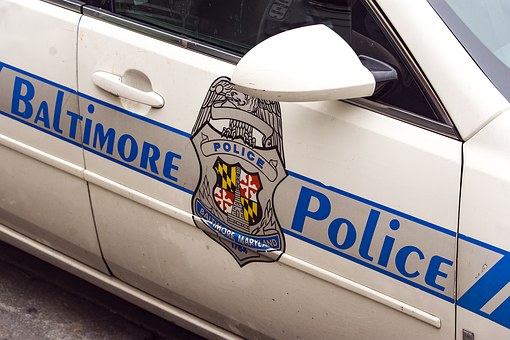
The modern media fans these inaccurate flames of hate. Any black person can attack an officer (white or black) and claim reverse racism. Many deadly attacks on police have been blamed on perceived racism. In Baltimore, MD, when a black arrestee died in the back of a police van, it was claimed to be because of racism by the officers. The officer driving the van was just transporting the arrestee. The arresting officer was black. The transporting officer was black. The police commissioner was black. The mayor was black. But the media allowed the thread of racism to mingle with the facts. And rap music stars, don’t get me started. NWA (_igge_ With an Attitude, today we can’t even mention their name) Tupac, Little Biggie, Snoope Dogg all admit they got their start by selling drugs to neighborhood children and others. But they claim they were harassed and preyed upon by the police because they were black, not for being drug dealers. Even when the officers were black.